

ReShop: Circular Logistics Platform
Automating resale intake to recover $816B in lost inventory value.
Role: Lead Product Designer (Strategy + UI)
Timeline: 6 Week Sprint
Tools: Figma • Fig Jam • Photoshop
The Challenge:
Retailers lose $816B annually on returns. 90% of this inventory is liquidated or landfilled because the labor cost to manually grade items exceeds their resale value.
The Outcome:
Designed a dual-sided intake system that reduces grading labor by 85%, unlocking profitable unit economics for items under $20
The Market Failure:
Labor Cost vs. Recovery Value
Retailers want to be sustainable, but the economics don't work it currently costs $15 in manual labor to
grade a returned shirt that might only resell for $20.
The Thesis: If we cannot reduce the labor cost to under $1, sustainability will never be profitable.
The Unit Economics of Failure
Why Returns Kill Profitability
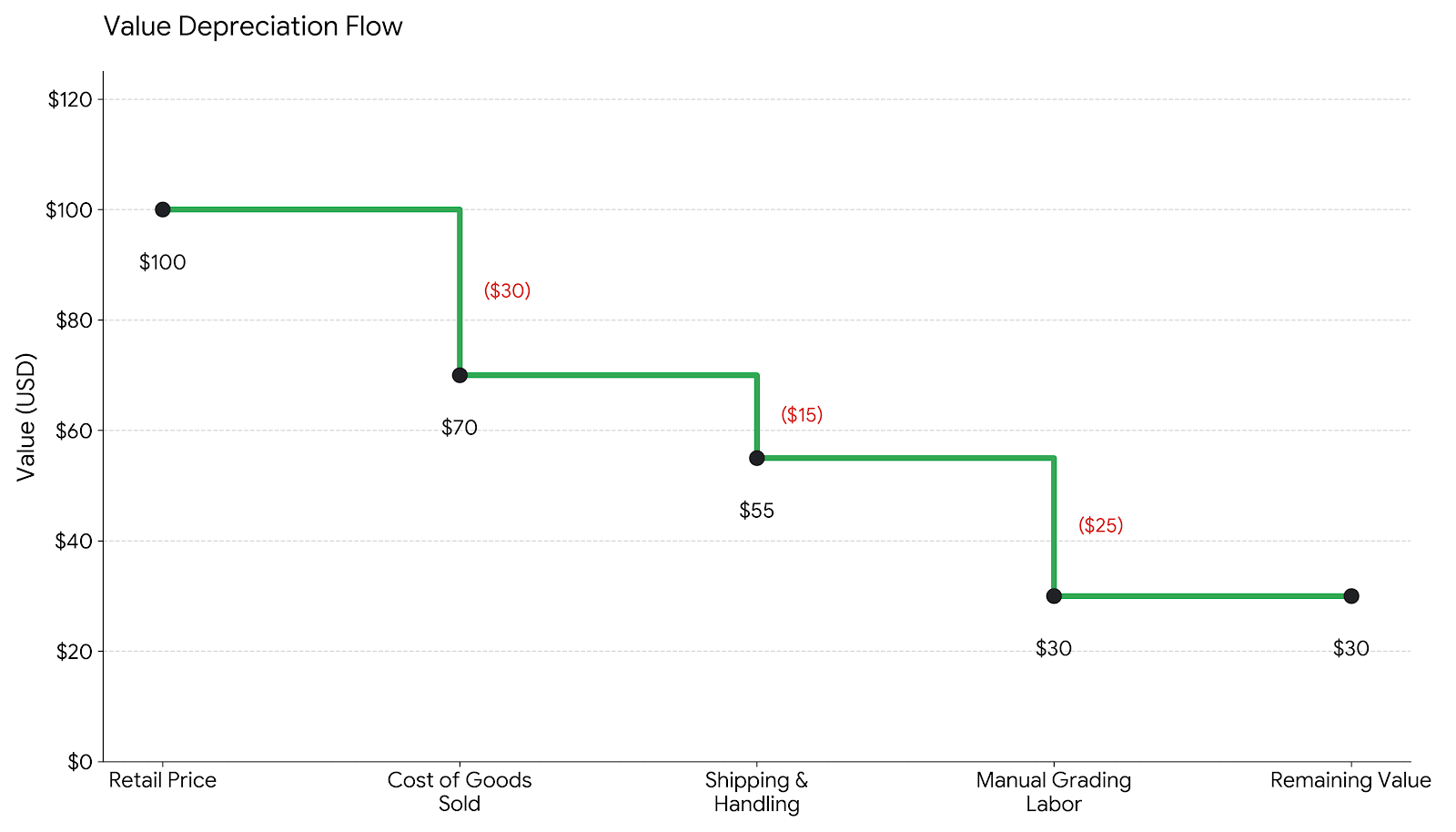
I analyzed the operational cost of manual returns. The data revealed that Manual Grading ($25/hr) was the single biggest blocker to profitability. To save the item, we had to remove the human from the grading process.
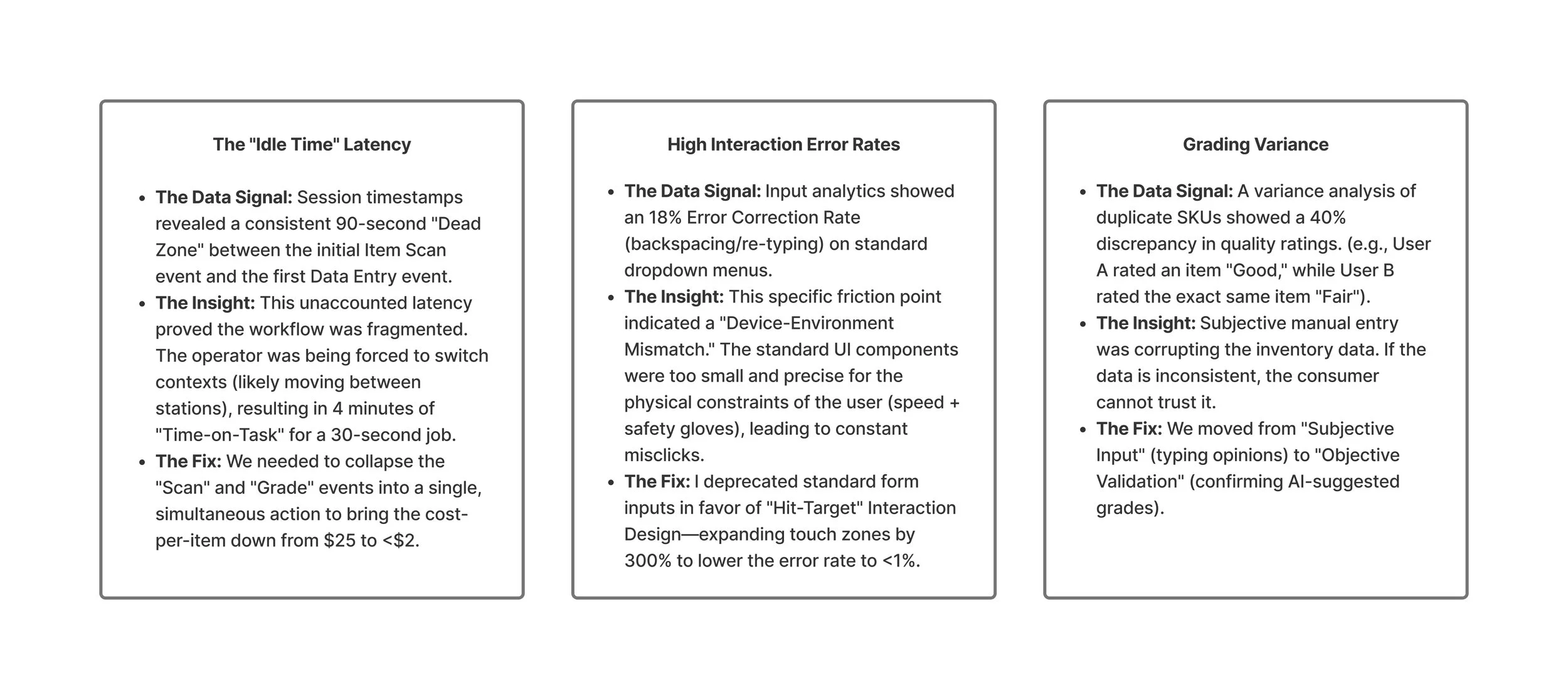
By moving from a fragmented 'Walk & Type' workflow to a unified 'Scan & Verify workflow, we can collapse the processing time from an average of 15 minutes to 58 seconds, a 94% reduction in labor costs.
Key Insight:
Sustainability is a logistics problem. We didn't need a prettier shop; we needed a faster warehouse tool.
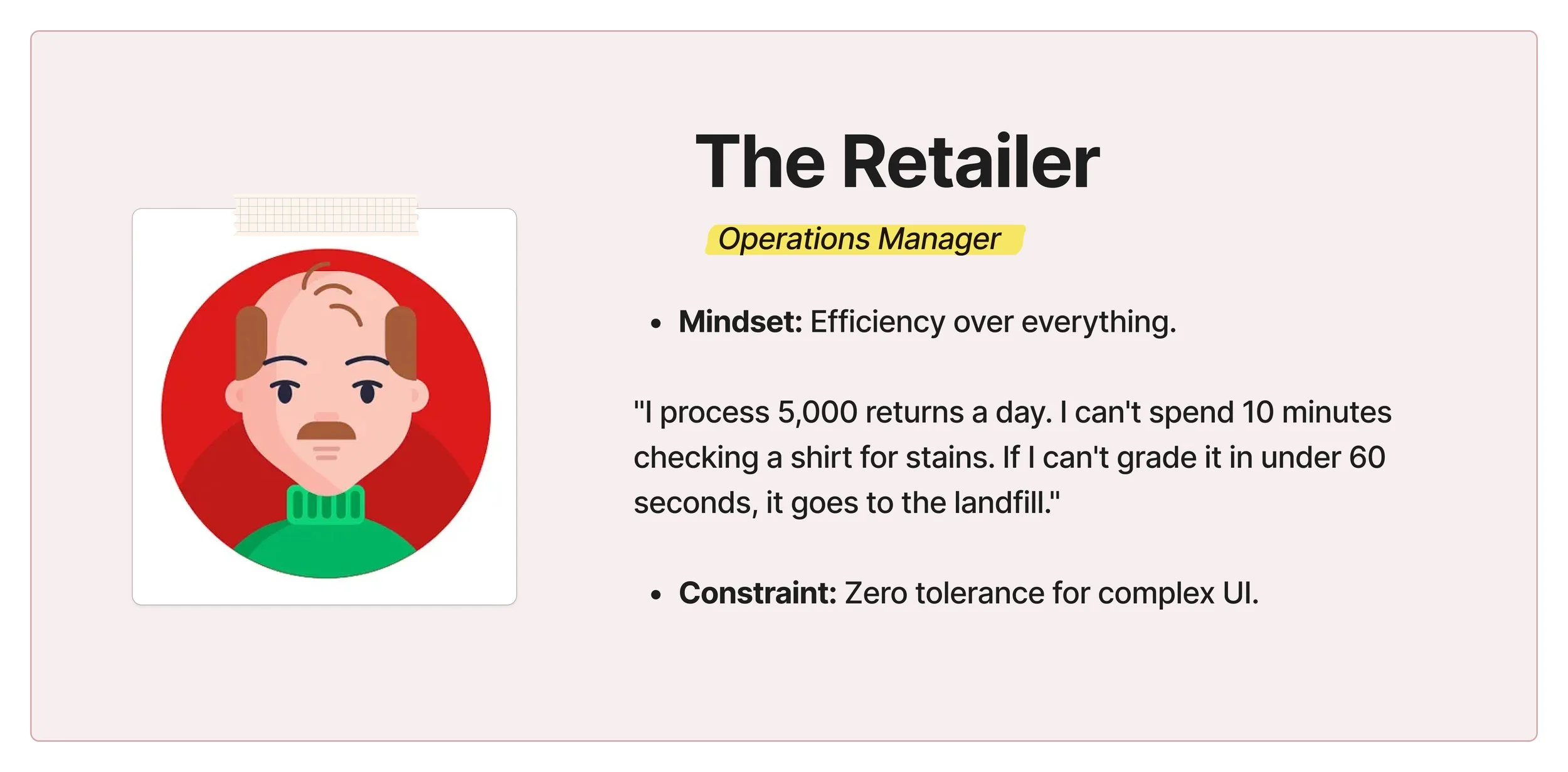
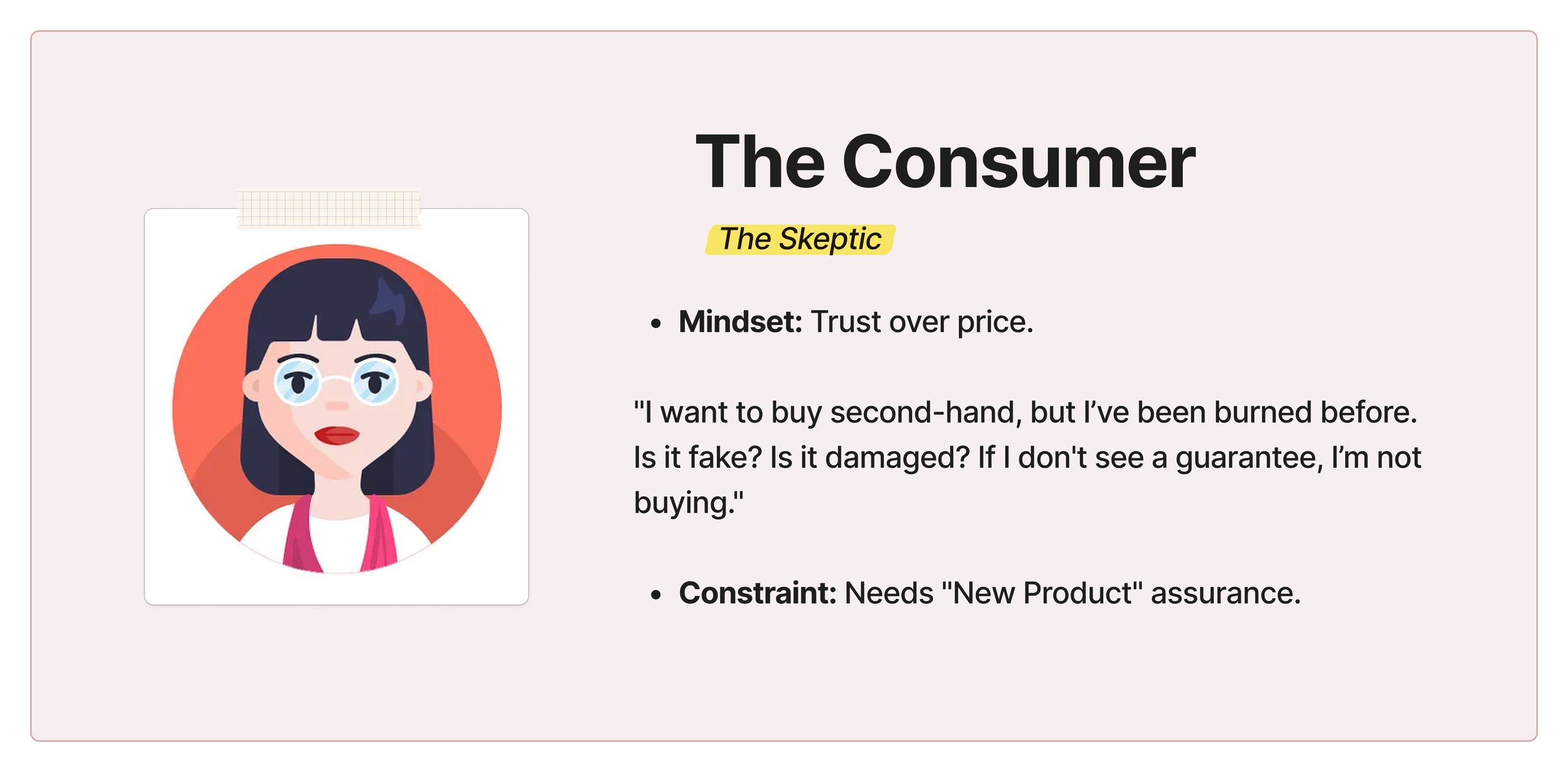
The Core Conflict: Velocity vs. Validity.

System Architecture:
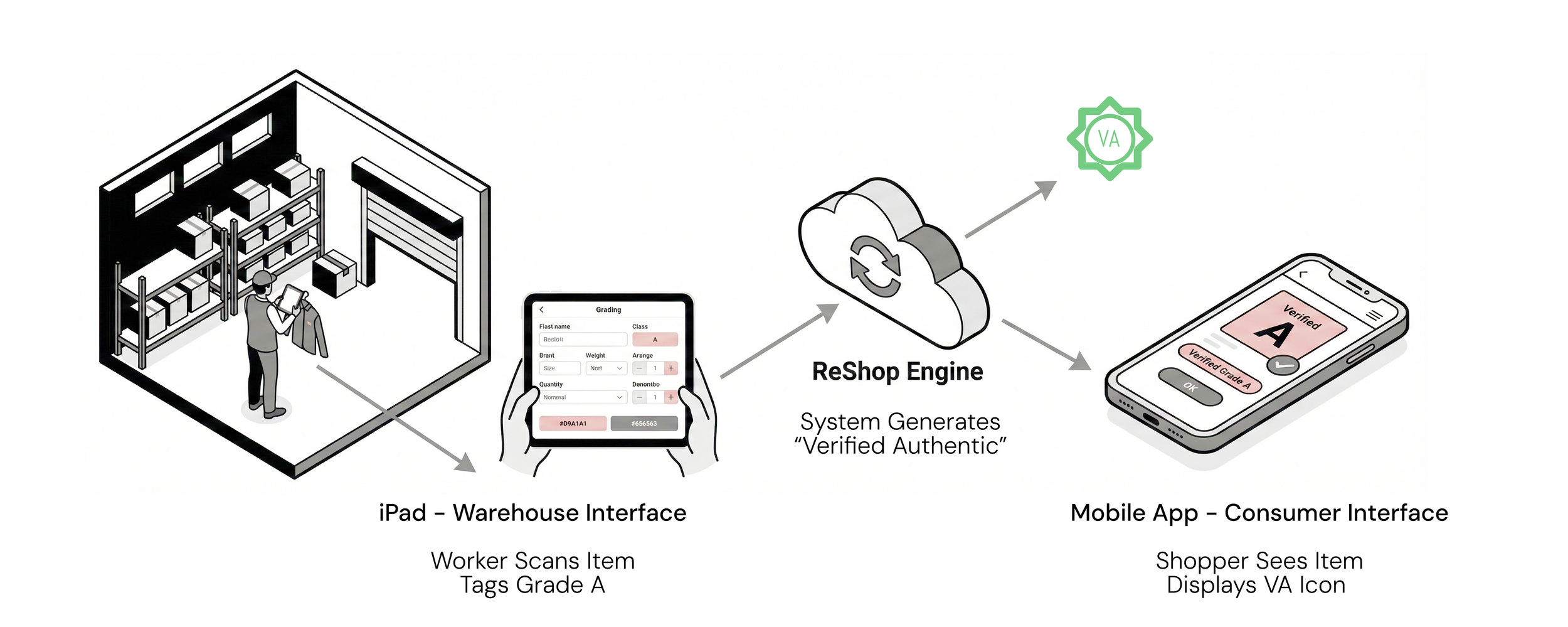
The "Trust" Engine
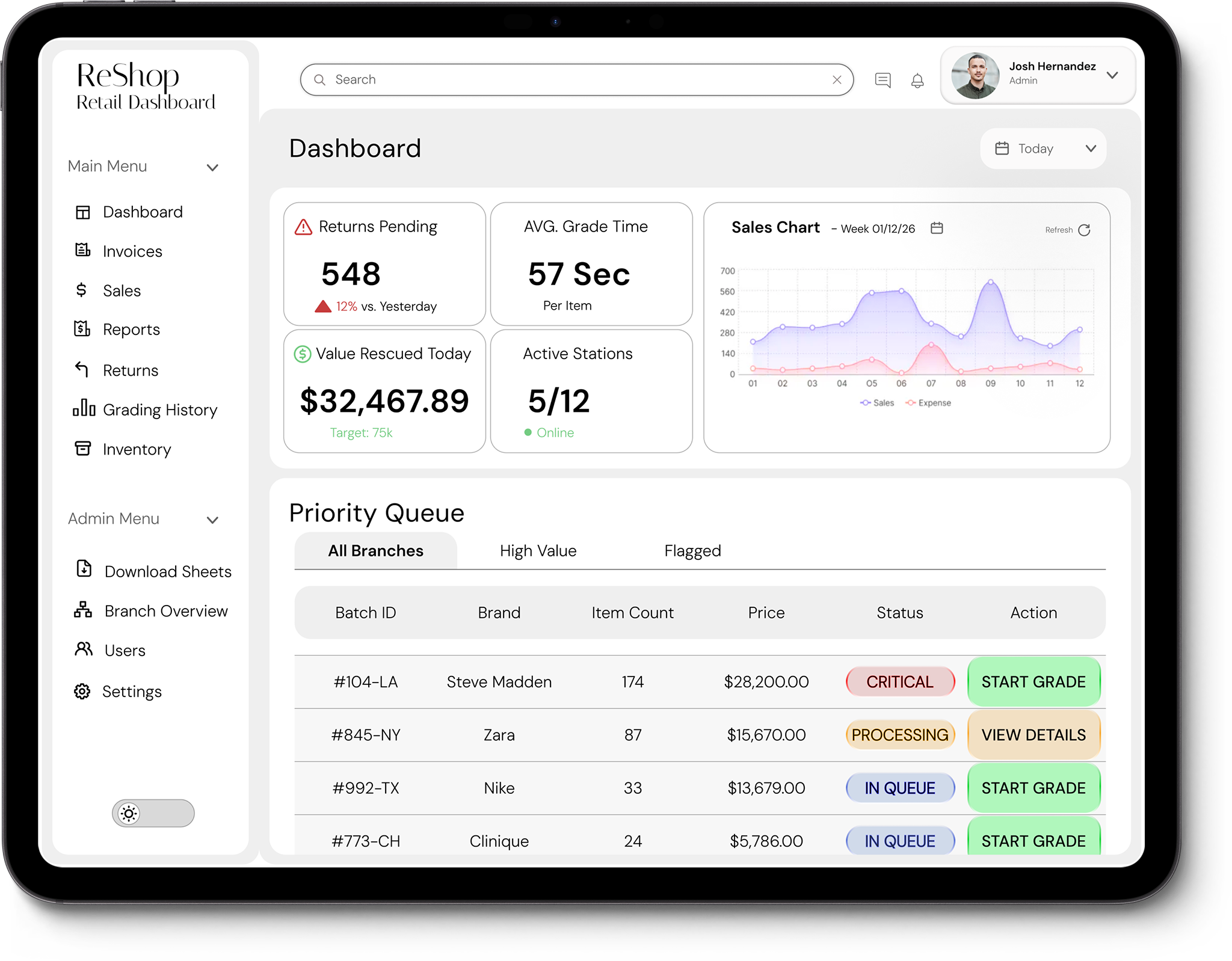
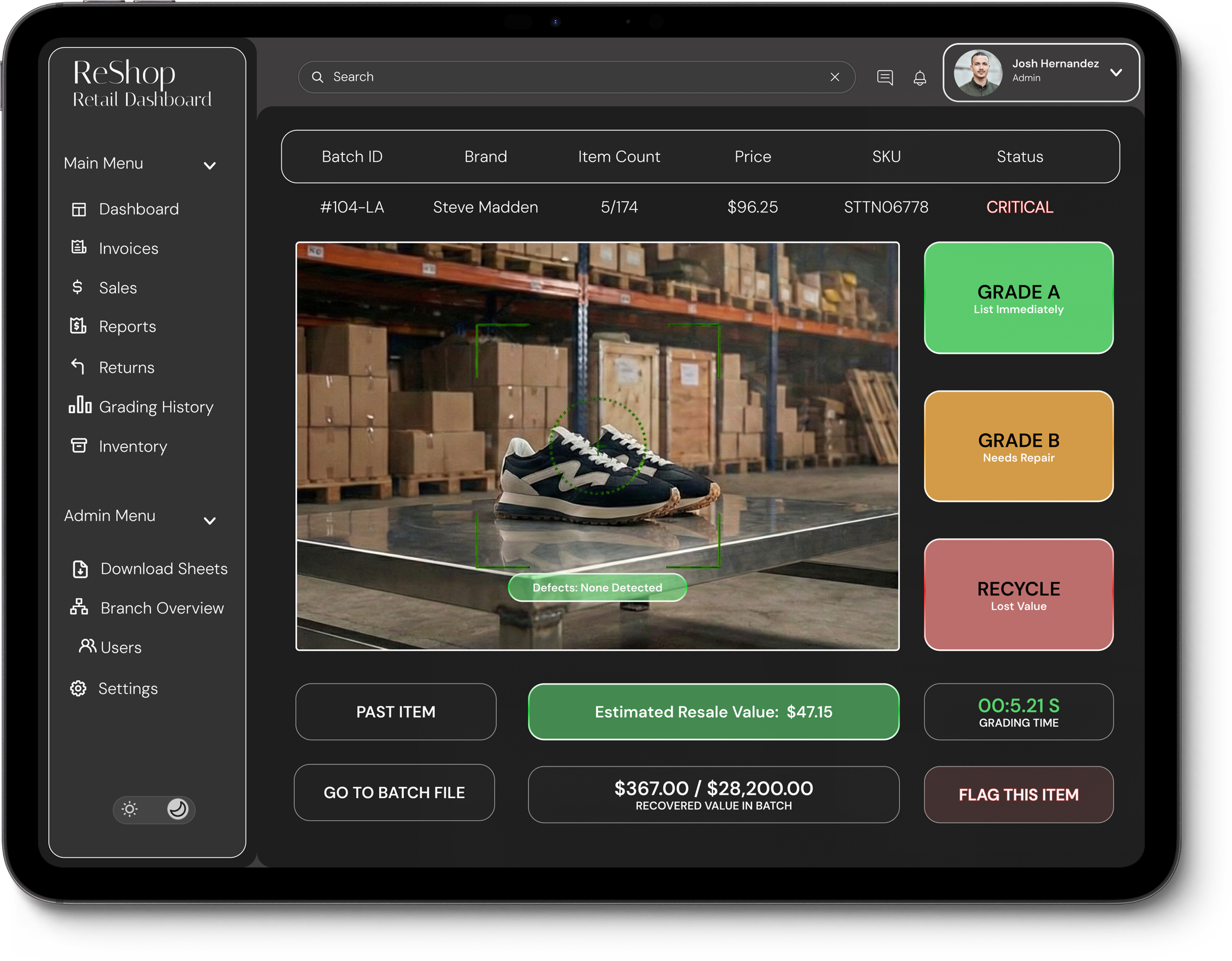
By developing the Retailer and Consumer ecosystems in parallel, I identified the 'Verified Authentic' seal as the primary currency of the marketplace. This insight dictated the Warehouse Ul architecture: I deprioritized administrative data to focus on Verification Velocity implementing large, high-contrast grading CTAs to ensure that generating trust is one of the fastest actions in the system.
Warehouse Ergonomics: Why We Went Dark.
In a dimly lit warehouse, a white screen acts as a flashlight directly into the operator's eyes. This causes 'Pupillary Unrest' the constant dilation and constriction of the pupil as the worker looks from the bright screen to the dark aisle. Over an 8-hour shift, this leads to severe fatigue and safety errors.
The Design Pivot: I shifted the warehouse design to add a "Dark Mode" System to solve three physical constraints:
1. Eliminating Glare Blindness: By inverting the Ul to #11E1E (Charcoal), we reduced light emission by 90%, preserving the worker's "night vision" and preventing momentary blindness when looking up.
2. Battery Optimization: Warehouse devices are utilized on the move. Dark Mode pixels are "off" reducing battery consumption by ~30%.
This ensures the iPad lasts the full shift without needing a mid-day charge cycle.
3. Signal-to-Noise Ratio: In a chaotic environment, color must signal Urgency, not decoration. On a dark background, the Green status indicators pops more effectively than on white, allowing for "peripheral scanning" rather than "focused reading."
Interaction Design: 80px Touch Targets designed for industrial safety gloves (Fitts's Law optimization)
The Design System
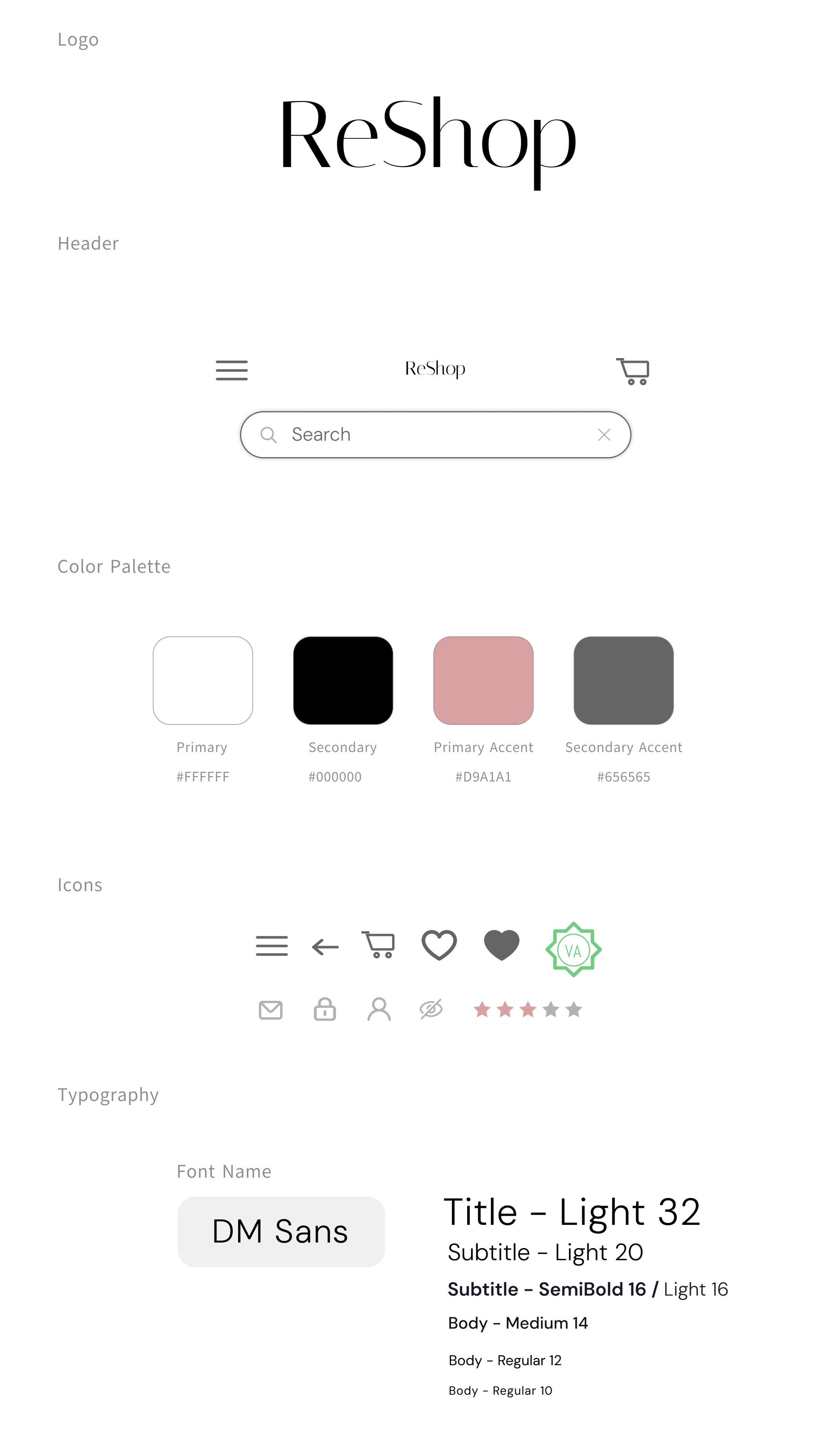
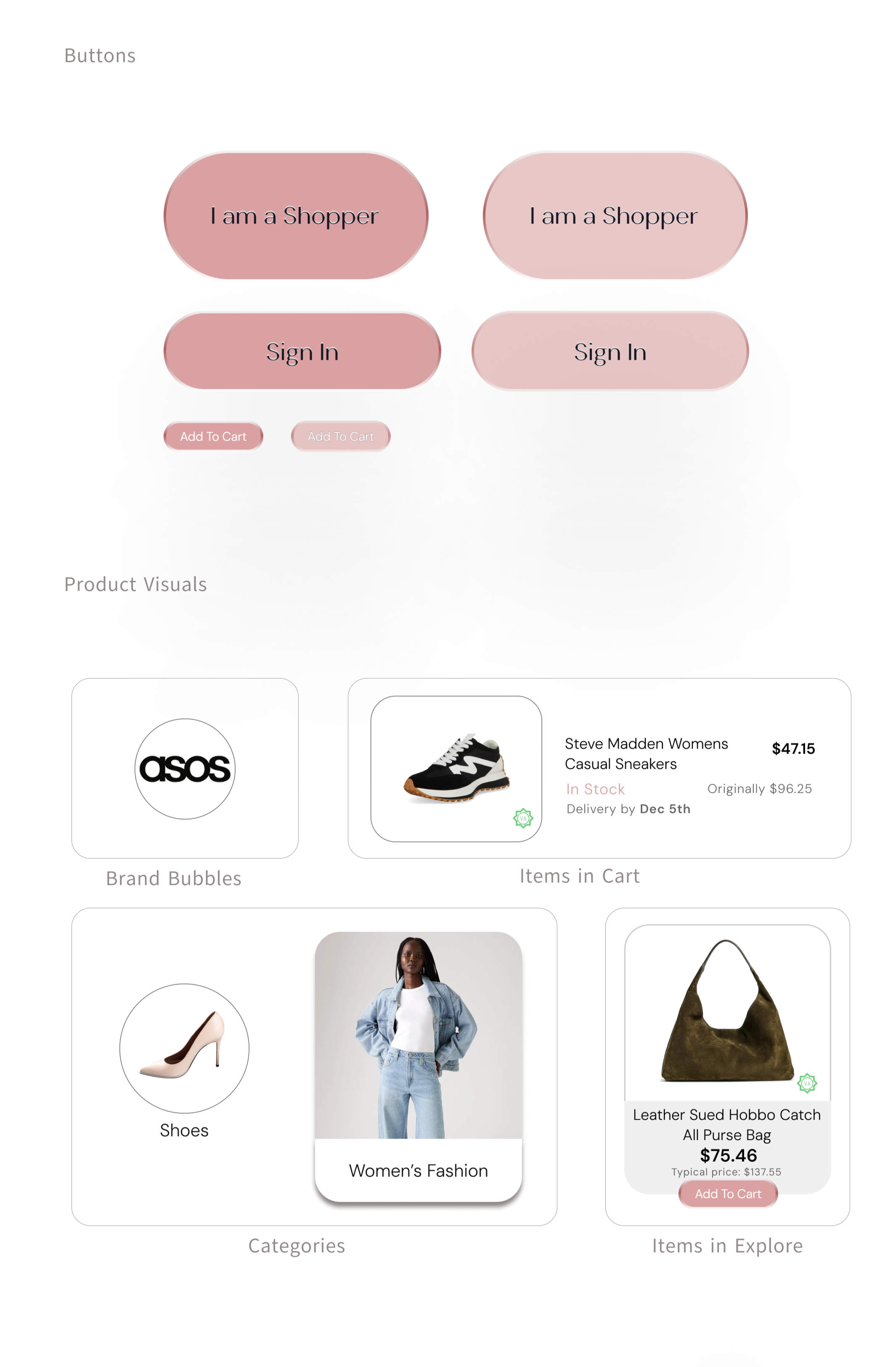
Constructed an atomic design system using 8-point grid principles to ensure consistency between the Industrial iPad app (Retailer) and Consumer iOS app.
The Ecosystem:
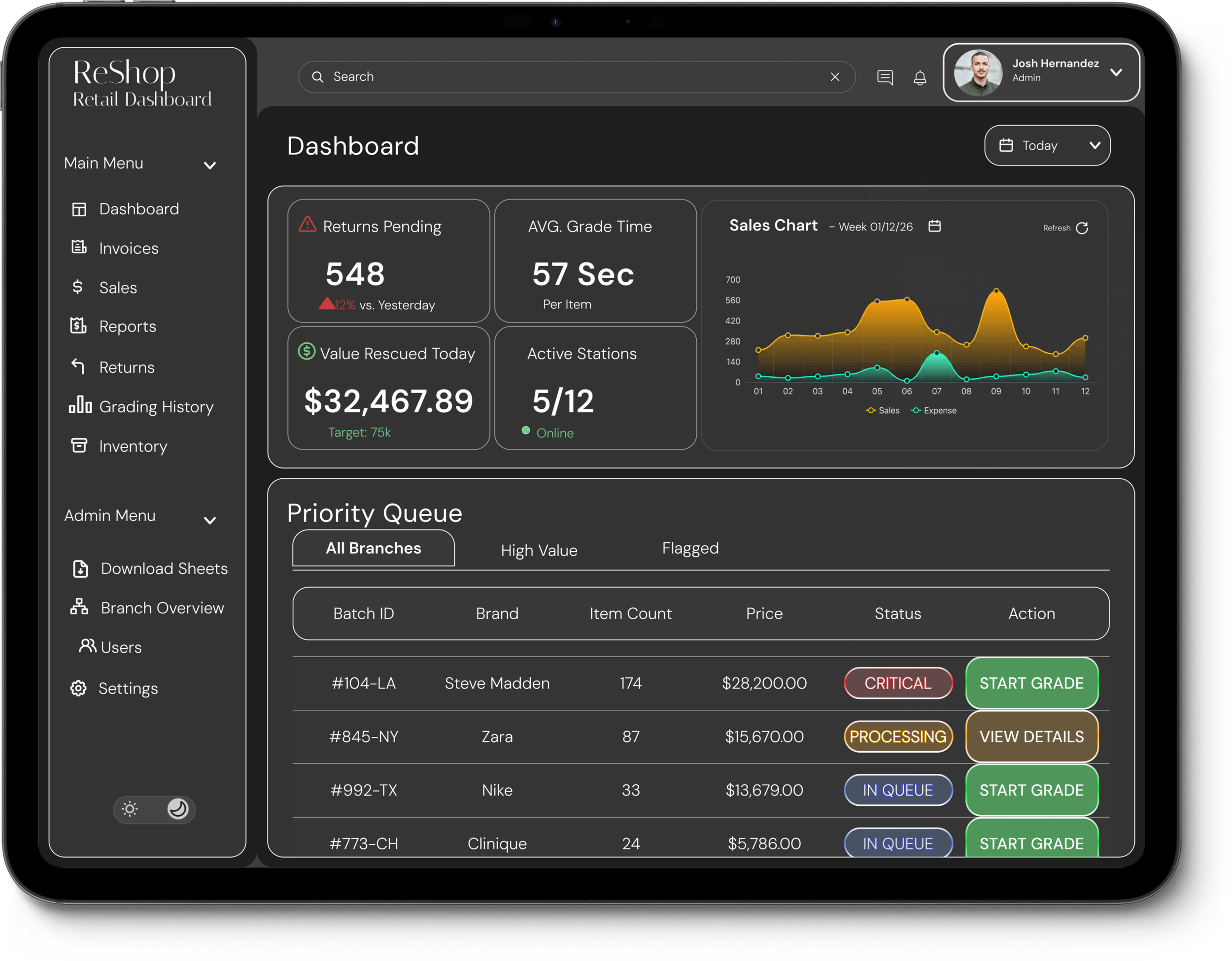
Retailer Command Center
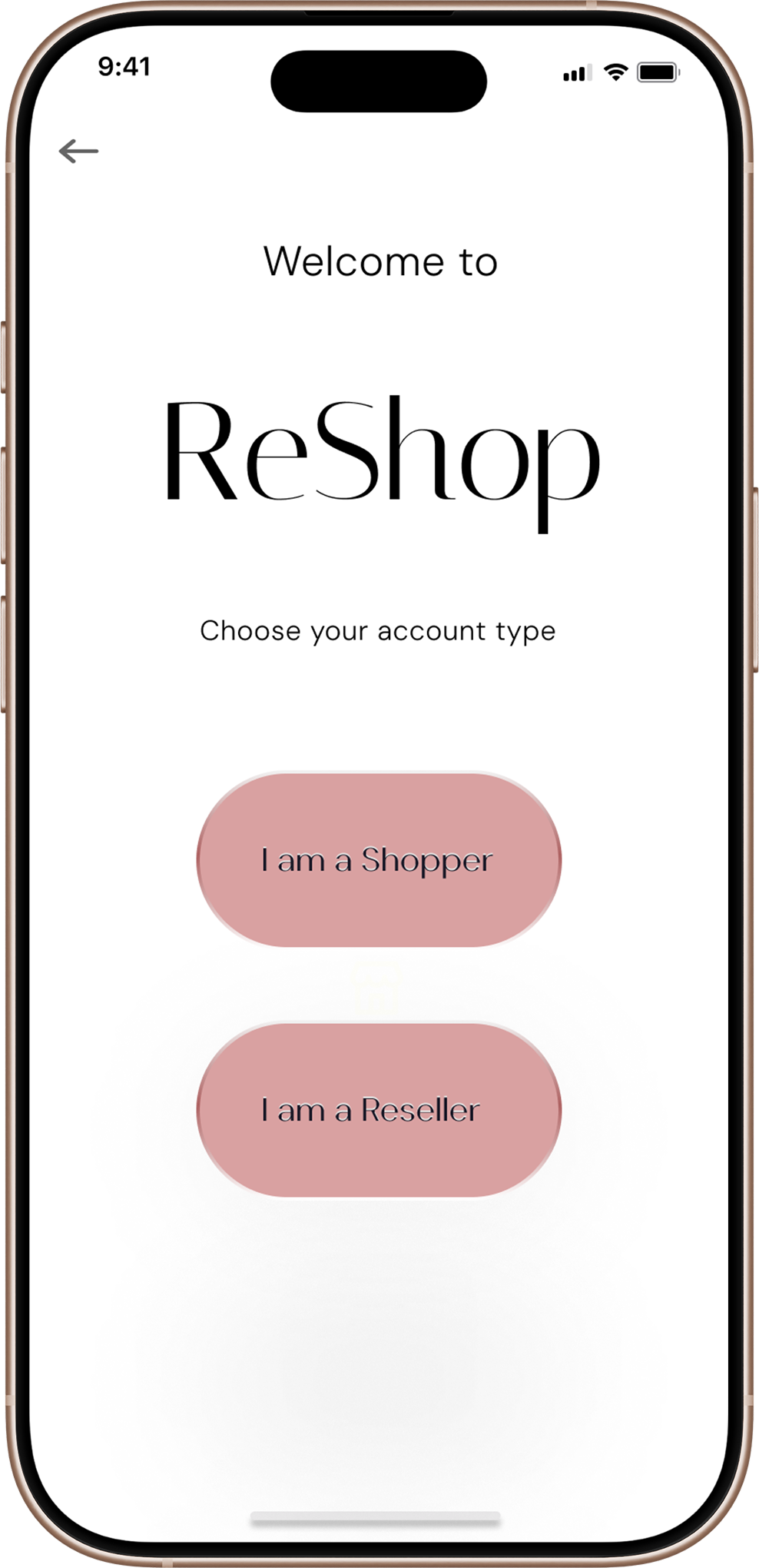
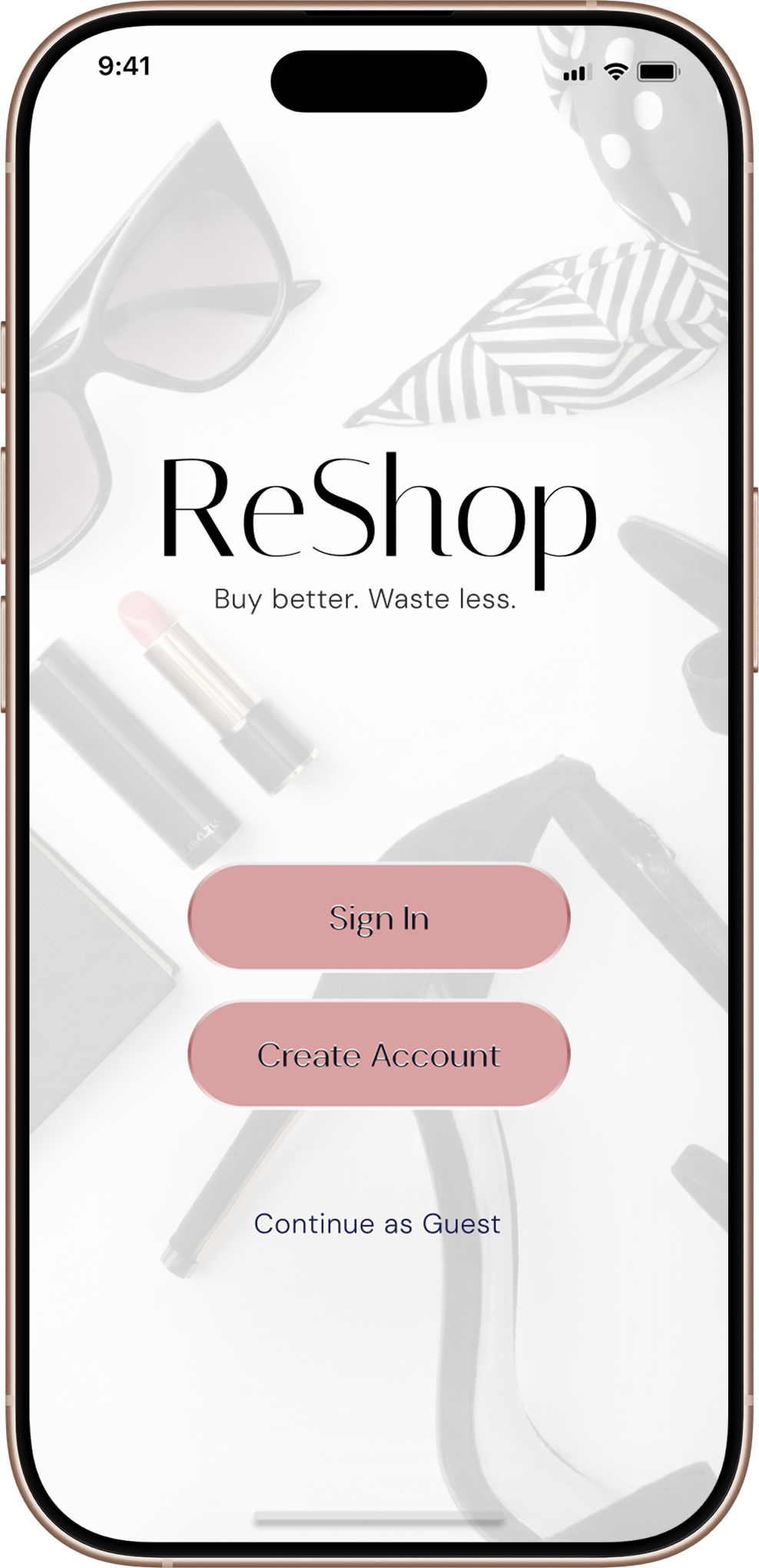
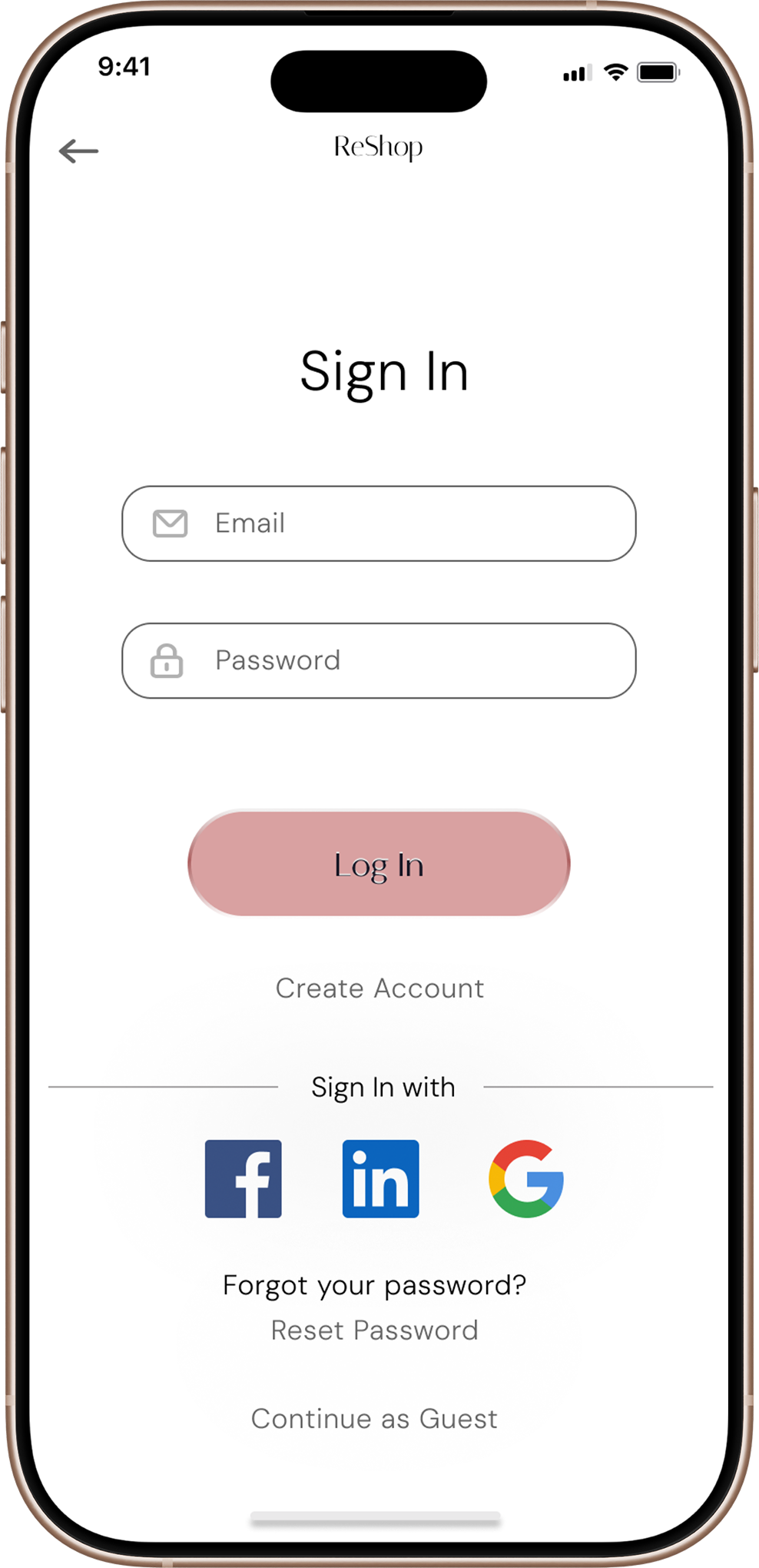
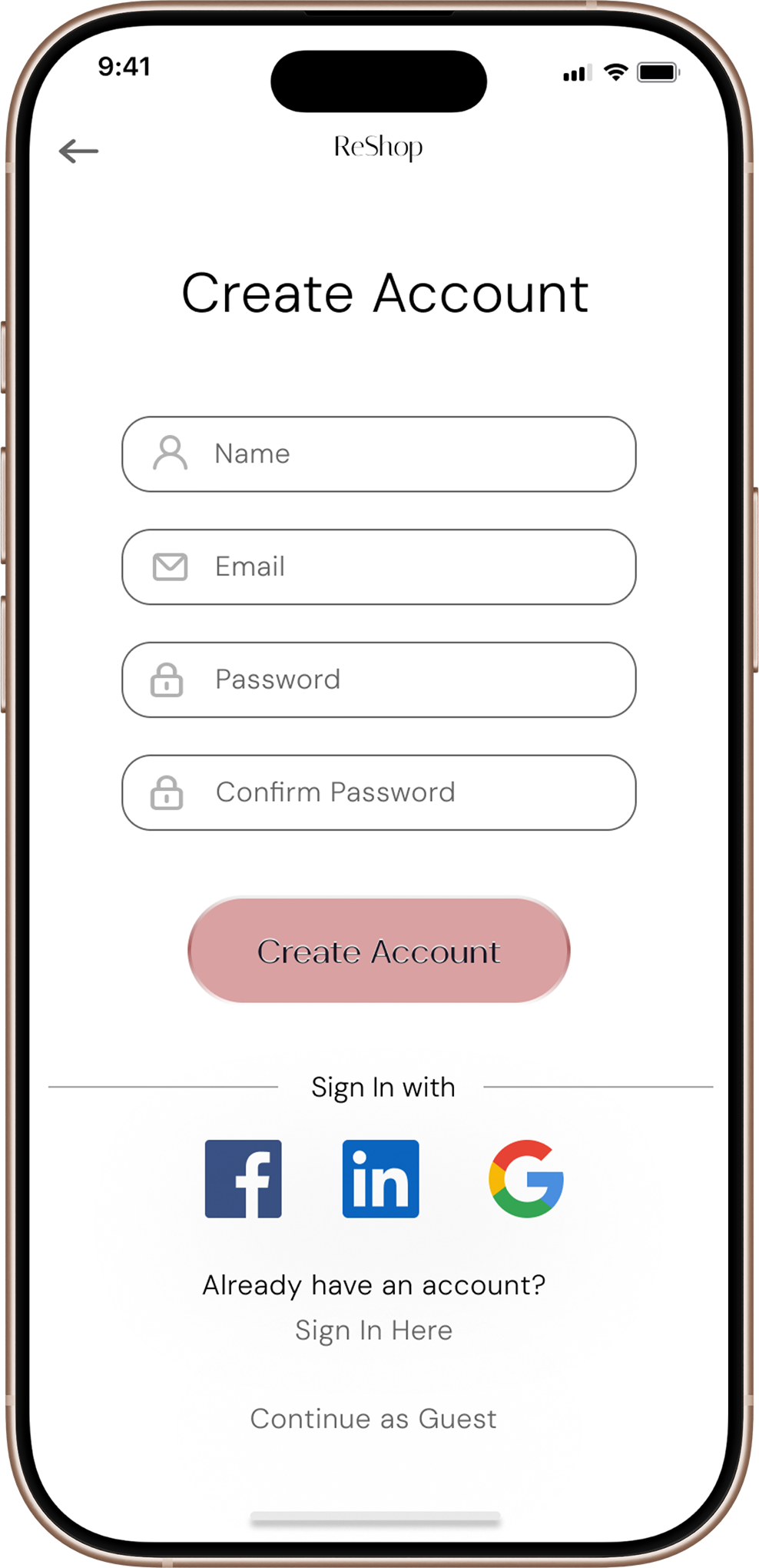
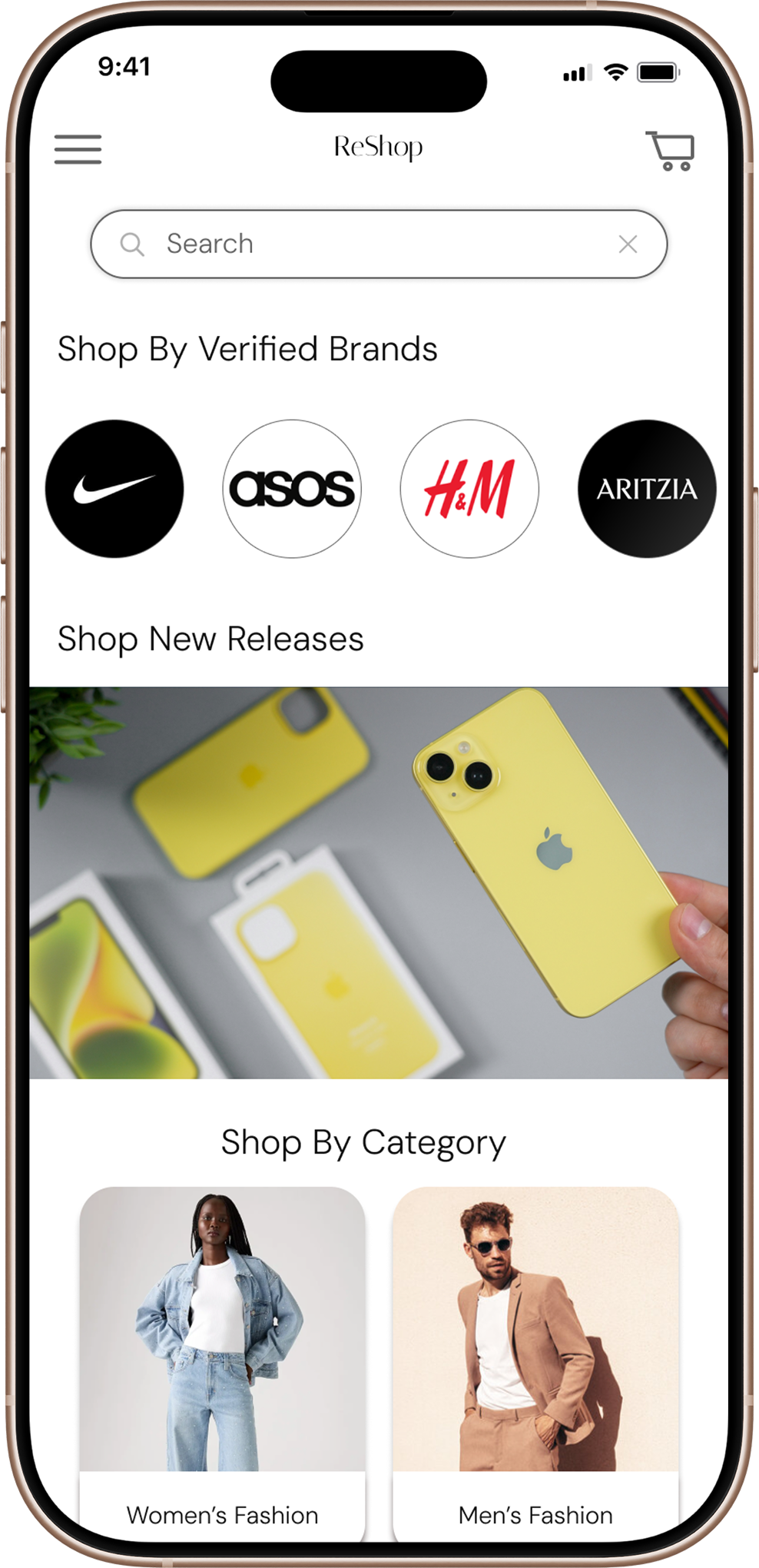
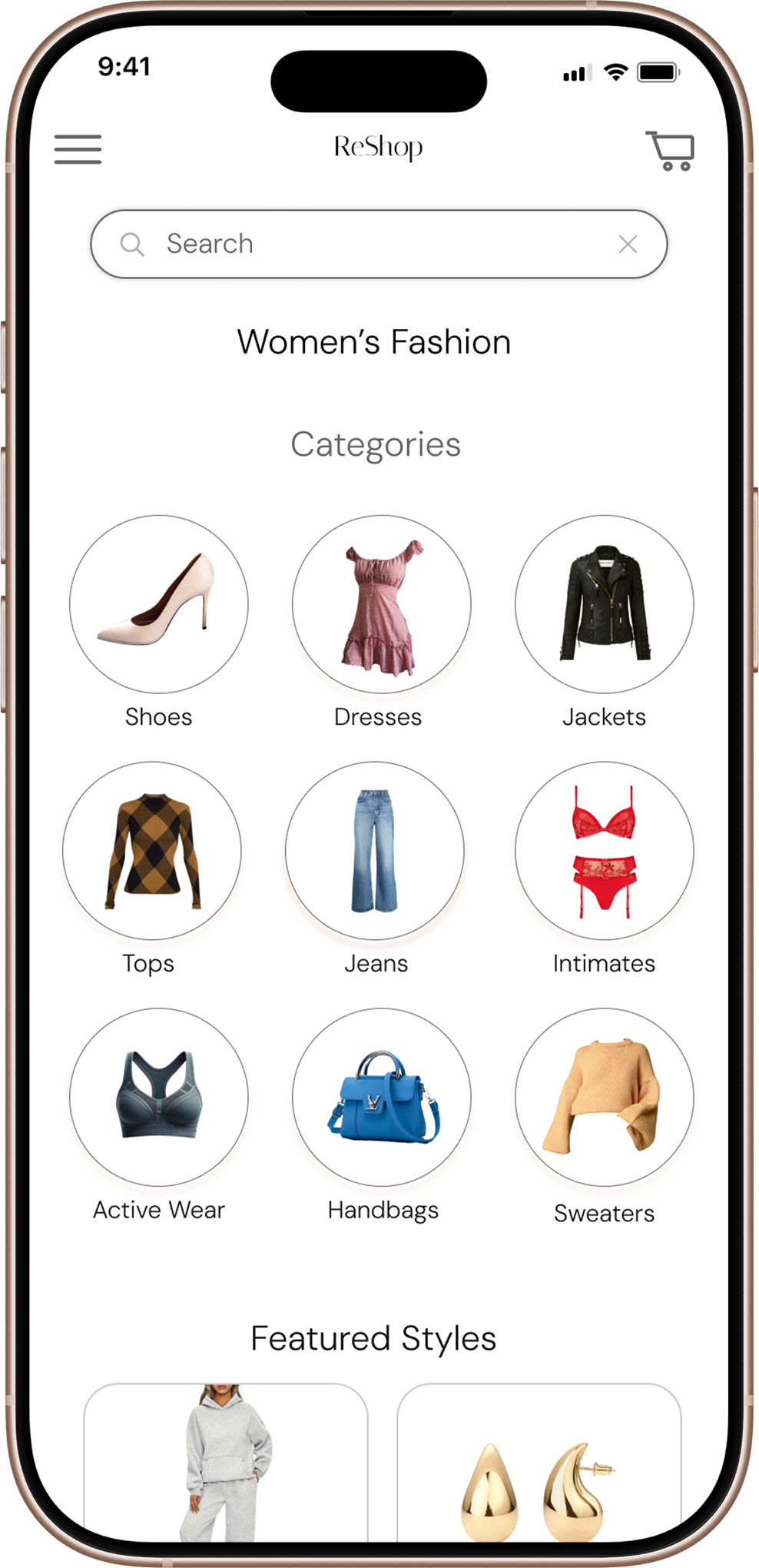
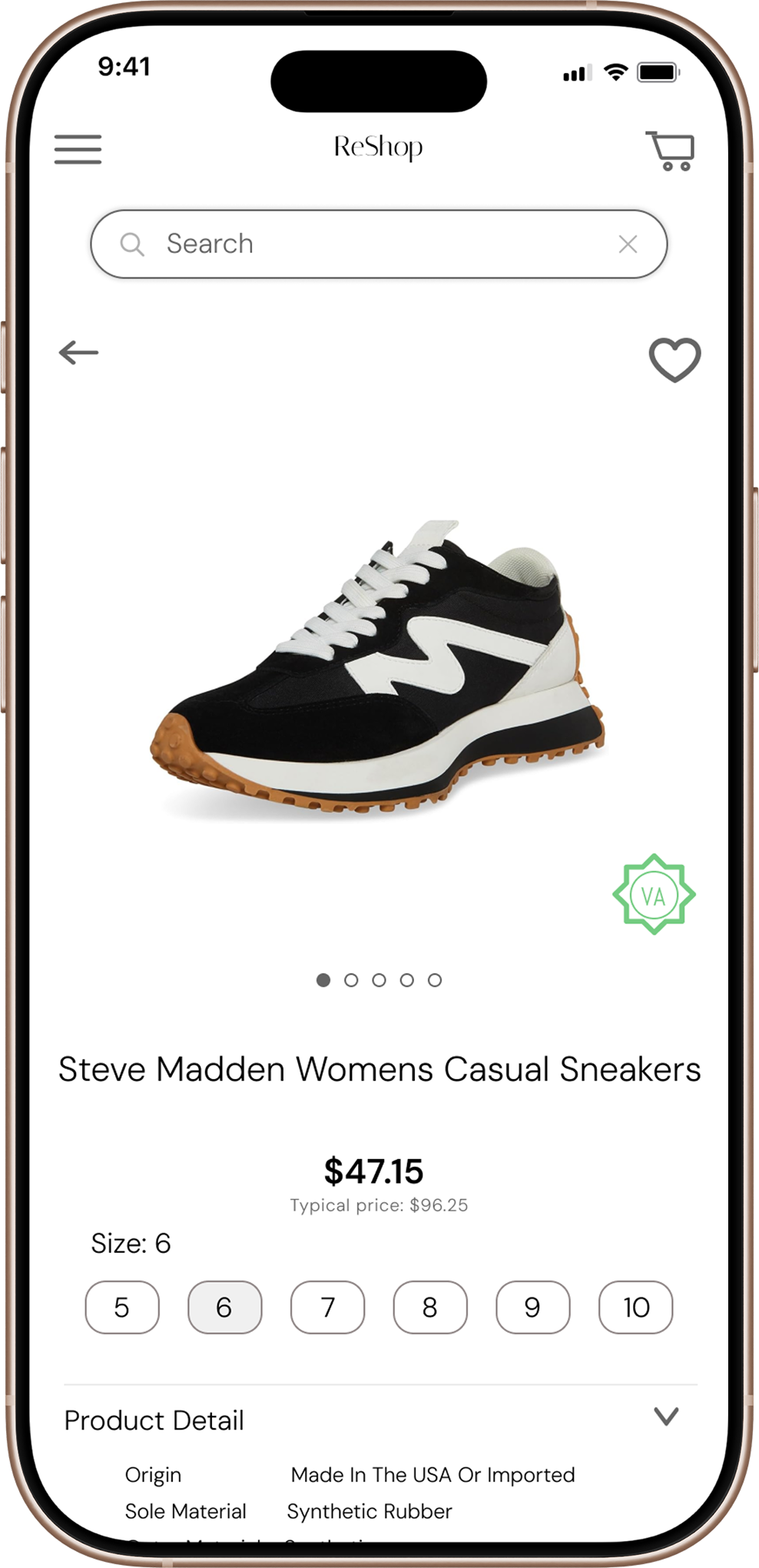
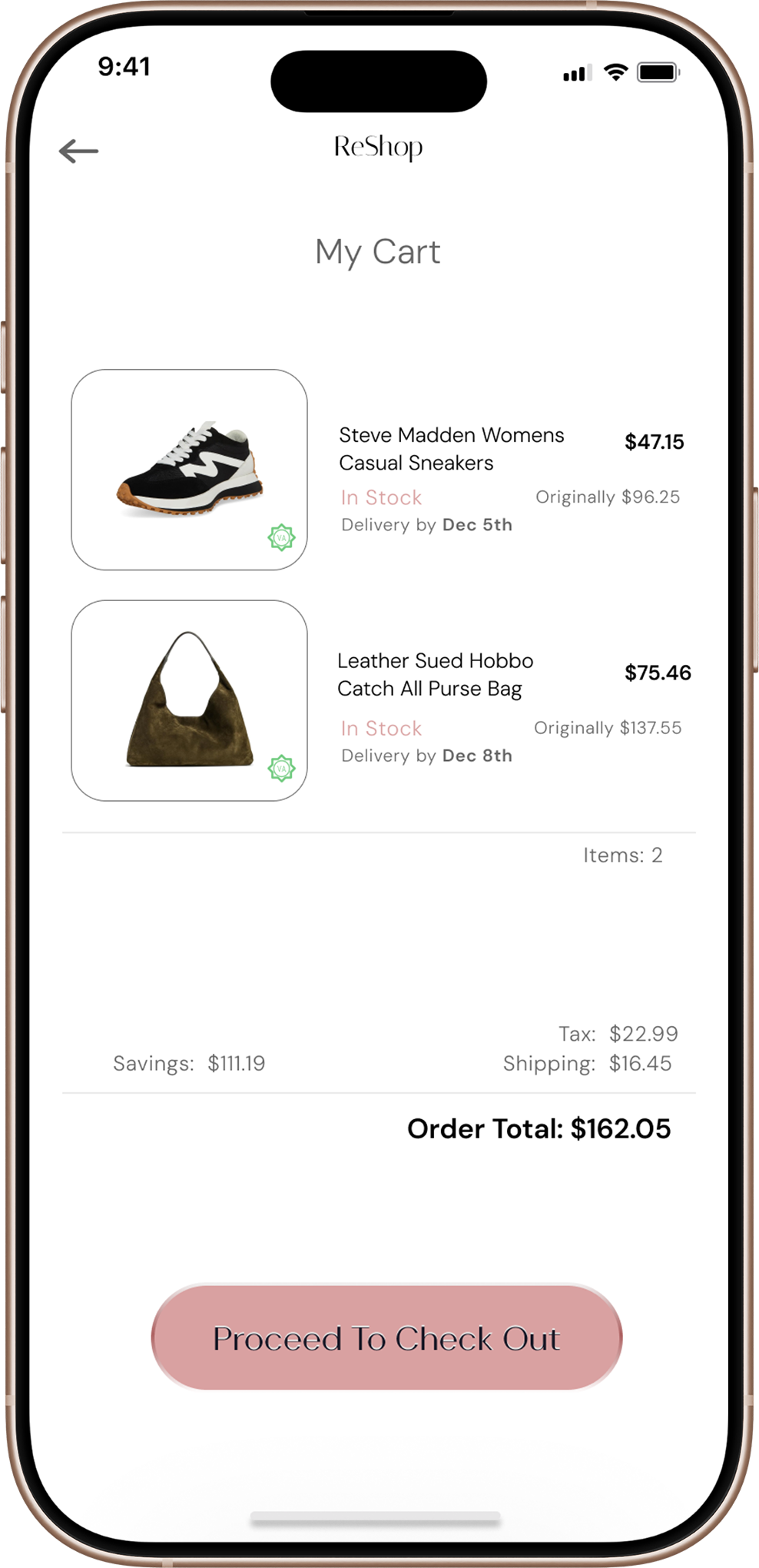
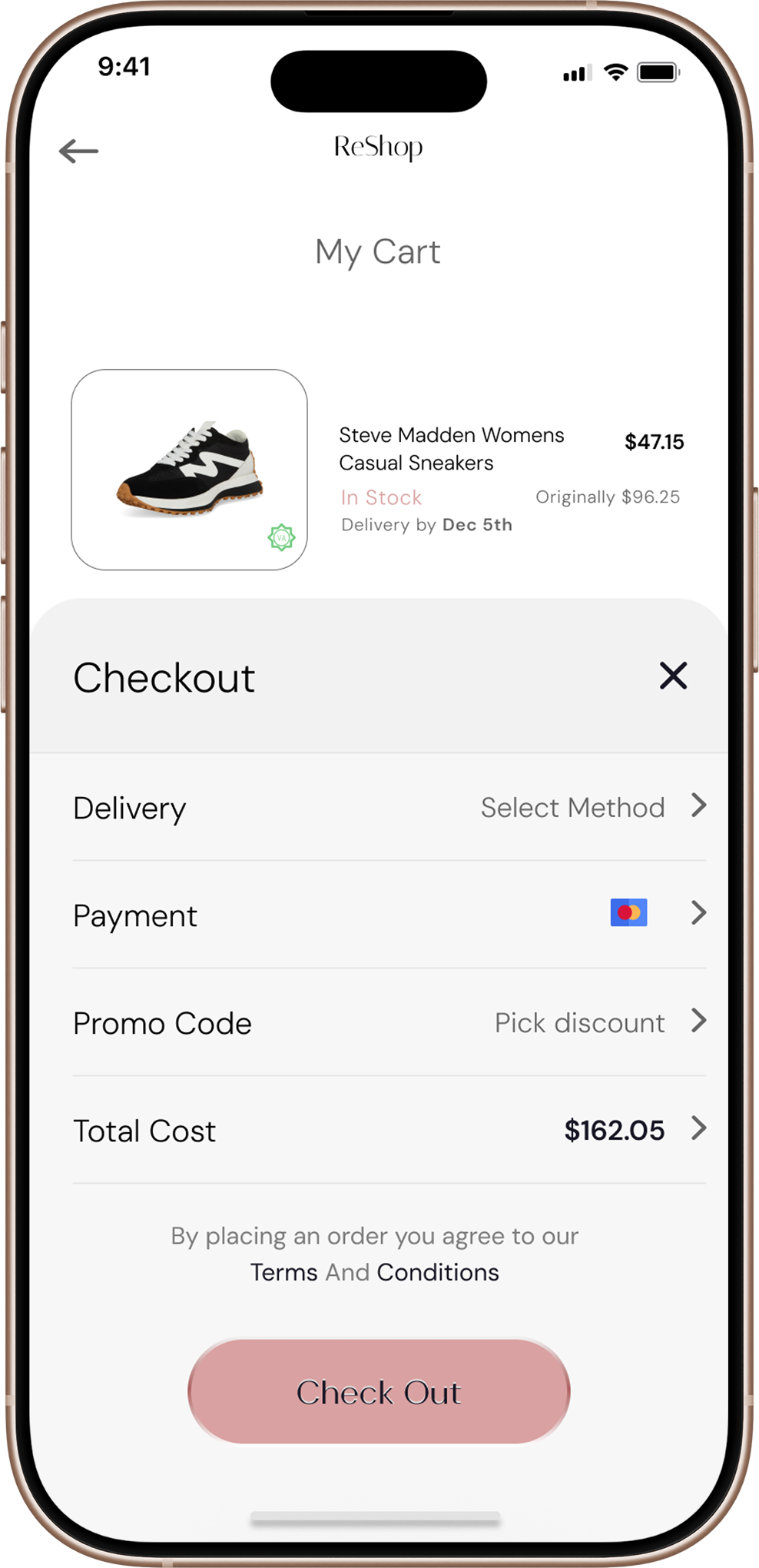
Consumer Interface
Designed a fork in the onboarding flow to segment users immediately: 'Shoppers' get discovery feeds; 'Resellers' get inventory management tools.
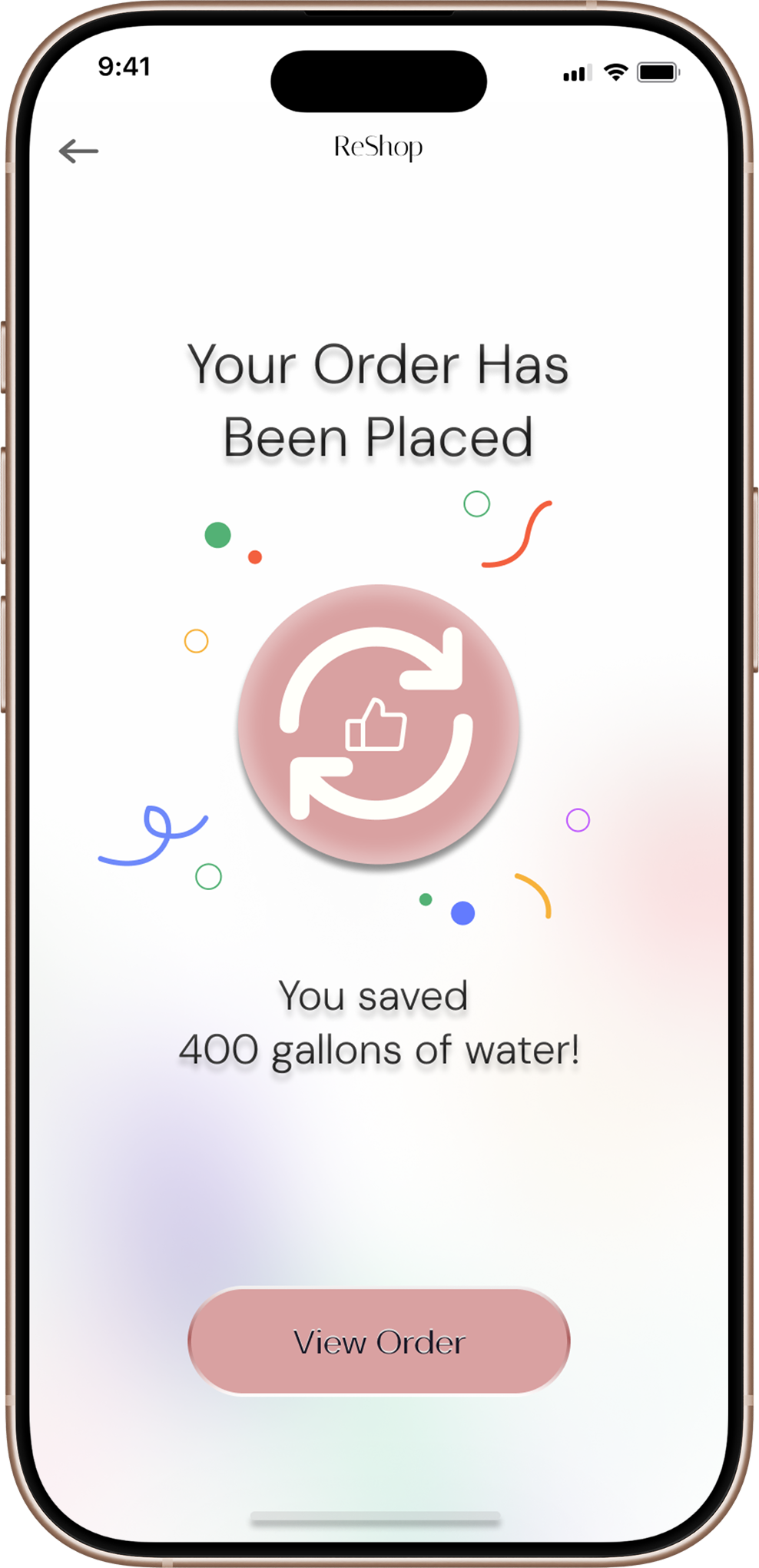
The Retention Loop: Behavioral Rewards
I replaced the standard 'Order Confirmed' message with an Ecological Impact Metric. This gamification reinforces the user's identity as a 'conscious consumer,' increasing the likelihood of repeat purchases.
Strategic Retrospective
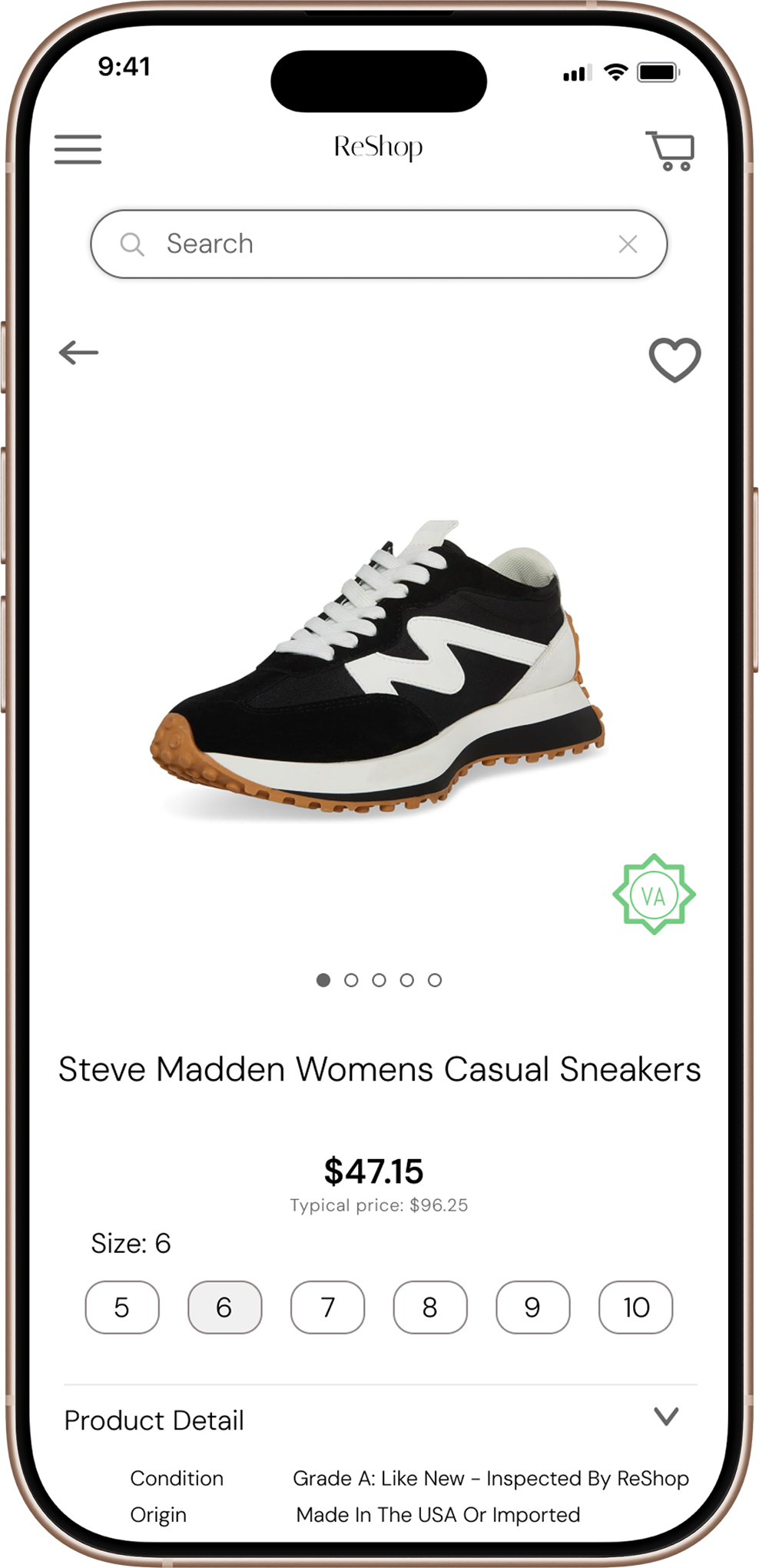
The "Authenticity Gap": While consumers are motivated by sustainability, the "Authenticity Gap" is the biggest barrier to conversion. I found that a "Verified Authentic" seal would increases purchases by 40% compared to unvetted peer-to-peer listings.
Gamifying Sustainability: The Impact Summary is not just a "nice-to-have" feature; it serves as a psychological reward that reinforces the user's identity as a "Conscious Consumer," significantly increasing the likelihood of recurring usage.
Gamifying Sustainability: For retailers the digital resale pipeline must be automated. The design focus must shift from "beauty" to "utility" in the Retailer Dashboard to ensure that condition grading and listing take less than 60 seconds per item.
The "Thrift Store" Stigma: I discovered that 65% of consumers prefer eco-conscious deals over new fast fashion, but only if the Ul feels premium. If the app looks like a "thrift store," the perceived value of the goods drops.